
WorkIng As A Chef in a Nursing Home Kitchen
The importance of being a nursing home cook
Care and nursing homes are often overlooked when we refer to the catering industry. However, with a growing older population care home catering is a vital sector. Every role in the kitchen, from kitchen assistant to head chef is important to ensure residents get the care and food they need.
Ensuring that residents have a nutritious and well-balanced diet is a crucial part of providing support in care homes. Essentially, the food and drink that we consume have a direct correlation to our health, well-being, and fundamentally our quality of life.
In care homes, food should be carefully prepared by trained chefs who work closely with nutritionists to create meals that meet special dietary needs. This ensures that they are both delicious and nutritious. These meals typically consist of fresh fruits and vegetables, lean proteins, whole grains, and low-fat dairy products.
To ensure that all of their residents benefit from these healthy meals, care homes will often implement dietary restrictions or recommendations based on each individual’s needs. For example, seniors with diabetes may be placed on special diets that limit the amount of carbohydrates and sugar they consume each day. Alternatively, residents with heart conditions may need to limit their intake of saturated fats and salt.
By providing care homes residents with healthy and delicious meals, care homes are helping them stay nourished and healthy. By working closely with nutritionists to develop the right menus for their residents, care homes can be sure that all of their residents receive the care they need and deserve.
A good care home will have a set menu that changes regularly so that residents don’t get bored of the same food. This also ensures they still receive the nutrients they require.



What skills do you need to work in a nursing home kitchen?
As a care home chef, you will be required to be as versatile as the food demands of your residents require you to be. This is likely to include;
Managing and controlling the smooth transition from formulated food to food made from scratch.
Putting together a comprehensive menu choice.
To prepare, cook and serve high-quality meals which are appetising, nutritious, and centred on residents preferences.
Taking into account any special dietary and allergen requirements.
To be active and engaging, provide technical advice and guidance on food-related matters.
Ensuring a positive and supportive working environment for the team.
To understand and comply with all statutory and legal requirements, including Hazard Analysis & Critical Control Points (HACCP), Health & Safety, Manual Handling, Control of Substances Hazardous to Health (COSHH), Food Safety, and Food Hygiene.
Have a clear understanding of Infection Prevention and Control policies, procedures, and measures to maintain a safe environment throughout the home.
Monitor and maintain kitchen cleaning schedules ensuring that all areas of the kitchen are clean.
Ensure sufficient food stocks are ordered, received and controlled through suppliers and that effective stock management is maintained, including the completion of monthly stock takes to keep food wastage to a minimum.
Responsible for the safe operation and maintenance of all kitchen equipment, ensuring any damage or faults are reported and follow up action is initiated.
Organise specific food events and activities for the benefit of residents.
How does a nursing home kitchen run?
As a chef in a nursing home you will be responsible for delivering quality, tasty and nutritious food for the residents of the home. The great thing about a nursing home chef is that you will likely have a lot more interaction with your ‘customers’ than you would in a traditional public restaurant. It’s important to remember that you are working in the resident’s home which means that you will be serving the same people every day. The challenge of a care home chef is to provide the right nutritious benefit for an array of residents while keeping the food interesting. Just as we all like to experience new cuisines and different food experiences, so do the residents!
It is likely that you will provide a breakfast service for residents which may be a combination of hot and cold food. This will be served in the main eating room but you may also be required to plate up food for those residents unable to attend.
Following cleaning down from breakfast you will then start to prepare for lunch. You will need to offer a range of food for the majority of residents as well as cater for the more specialised dietary requirements of individual residents. Many older people have a reduced appetite, partly due to a reduced sense of taste and smell, and some find they are unable to eat as much as they used to. Also, the body’s ability to digest, absorb and use vitamins and minerals decreases with age. Purees and dips, and easy-to-eat foods such as slow-cooked stews and mashed potato can all help tempt a client to start enjoying their food again.
This process continues into the last serving of the day at dinner time. Again, food should be prepared and cooked to ensure all residents are receiving nutritious meals. It is worth noting that a multicultural society means that you should be aware of residents’ cultural and religious backgrounds to ensure you are meeting their needs.
What are the shift types in a nursing home kitchen?
Full and part time shifts are usually available but will depend on the business need. As many care home finish dinner shift relatively early you will find you may not be expected to work into the evening or night as you would with a traditional restaurant.
What type of food do you cook in a nursing home kitchen?
Fruit and vegetables: Fruit and vegetables are a great source of vitamins and minerals, including folate, vitamin C and potassium. They also contain dietary fibre, which helps you maintain a healthy gut and can prevent constipation, digestion problems and reduce the risk of bowel cancer.
Protein: It is important to ensure a daily intake of protein at old age because it helps the body maintain and preserve muscle mass and strength as well as repair itself after injury or surgery. Research show that older people need a higher intake of protein as ageing bodies process protein less efficiently.
Foods that contain protein come from both animal and plant sources, including beans, pulses, meat, eggs, fish, tofu, chicken and peas.
Fat: Polyunsaturated fats, such as omega-3 fatty acids, found in oily fish, has been shown to help the protect against heart disease and may help relieve symptoms of rheumatoid arthritis, benefit joints, grip strength and mobility. Polyunsaturated fats are also found in sunflower oil, sesame oil, flaxseed oil, walnuts and hazelnuts.
Starchy food: Starchy foods such as potatoes, bread, rice and pasta play an important part of a healthy diet and are our main source of carbohydrates. They provide your body with energy and a variety of nutrients including fibre, calcium, iron and B vitamins. Potato skin is particularly rich in fibre.
Fortified and functional food: To ensure a good intake of nutrients and vitamins at old age despite a reduction in appetite and the fact that older people eat less than younger people, you can consume fortified and functional foods.
Fortified food has added nutrients to increase the intake without increasing the amount of food. Enriching the calorie and protein content of food and drink can help you to avoid unintentional weight loss.
Fortified foods can include breakfast cereals with added vitamins and minerals, such as iron, B vitamins and calcium.
What experience do you need to work in a nursing home kitchen?
Experience of working in a busy kitchen environment is expected, along with the ability to good healthy meals from scratch.
You should hold, as a minimum, a basic food hygiene certificate which of course should be up to date. As you would be working with vulnerable residents, expect a company to ask for a full DBS disclosure.
You get to go to different venues, you’re not stuck in the same job endlessly, not boring. You don’t have to go back when you don’t like somewhere and there is a variety of jobs.
Working for The Chef Tree is completely different from being a full-time chef. You choose the hours you want to do, fill in your portal, and everything is arranged around that.
How much does a nursing home chef get paid?
According to glassdoor.com, the average nursing home chef earns between £25,970 – £27,921 p/a.
What are the benefits of working for TCT?
When you join The Chef Tree you will be entitled to the following amazing benefits;
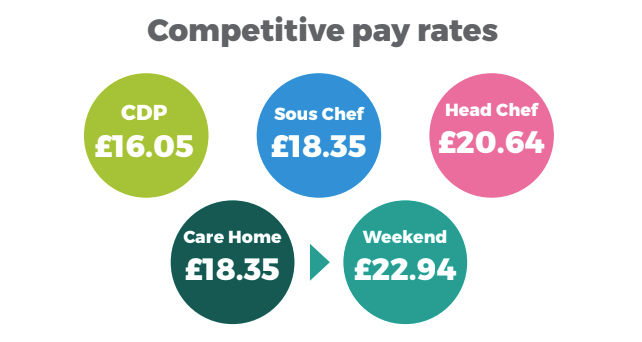
Competitive rates of pay. Our current rate for a cook is £16ph.
Our Monthly Bonus Scheme - Complete 166 hours per month (just under 38.5 hours per week) and you will receive £100 bonus. This will be paid monthly.
Our Refer a Chef scheme – If you refer a chef to us you will receive £150 when the chef completes 5 shifts. The chef you refer will receive £75 on completion of 5 shifts.
Access to our online benefit partners, Pirkx - a benefit scheme for courses, health, wellbeing, shopping and more! For more information visit www.pirkx.com
Where can you work as a Nursing Home Chef?
What our Chefs say!
I like working for The Chef Tree because of the freedom and the flexibility
You get to go to different venues, you’re not stuck in the same job endlessly, not boring. You don’t have to go back when you don’t like somewhere and there is a variety of jobs.
Working for The Chef Tree is completely different from being a full-time chef
You choose the hours you want to do, fill in your portal, and everything is
arranged around that
Dont just take our word for it
Dont just take our word for it, This is what our chefs say about working for the chef tree
Registration is quick and easy!
If you're looking for a new chef job and want to start right now then we can help!
Complete the form and we'll call you right back.
Step 1 of 1
Call us: 071 8604 611